
Building a Thinking Classroom: How Learning Spaces Can Get Students Thinking, Moving, and Collaborating
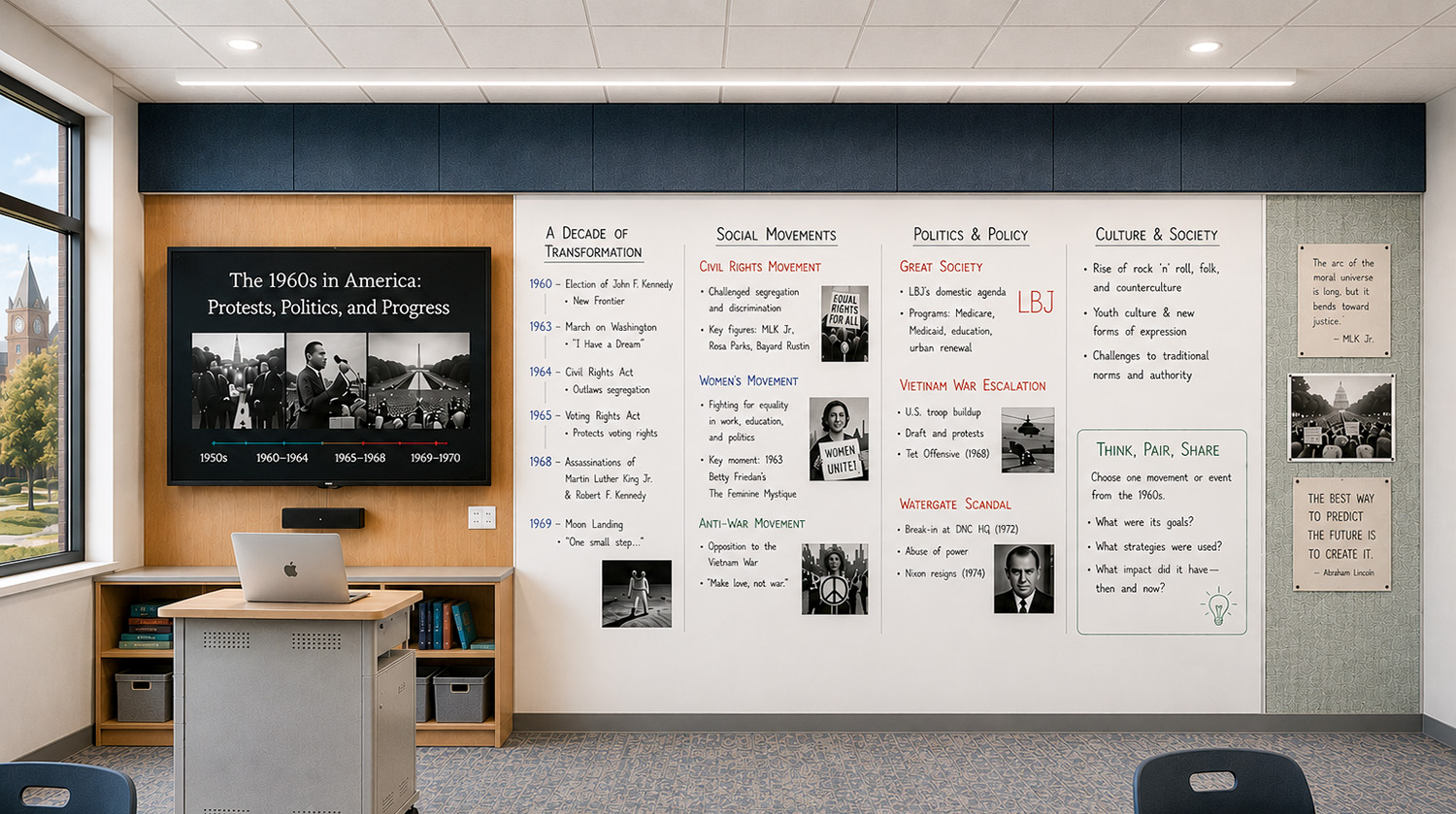
What happens when a classroom is designed not only for instruction, but for thinking?
For generations, classrooms have largely been organized around a simple idea: one primary teaching surface, one primary point of attention, and students seated around it.
Today’s classrooms support a broader range of teaching modalities, including direct instruction, independent work, hands on learning, and collaboration. At the same time, technology is changing how students access information and engage with content.
Digital tools and AI can put information and answers in front of students almost instantly. But access to information is not the same as learning. Research into cognition and learning shows that developing understanding requires students to actively engage with information: to retrieve, apply, question, discuss, revise, and connect ideas.
As the ways students access information and engage in learning expand, the physical environment has to support more than the delivery of content. Peter Liljedahl’s Building Thinking Classrooms offers one example of what this can look like in practice. His framework moves beyond an environment organized primarily around teacher presentation and considers how the space itself can support the learning process.
That raises a broader design question:
With teaching becoming more dynamic and technology reshaping how students access information, should learning environments evolve alongside them?
From Teaching Surface to Learning Infrastructure
Traditionally, the classroom wall has been treated primarily as a place to present information. But if the classroom is expected to support multiple teaching modalities, the perimeter has to do more.
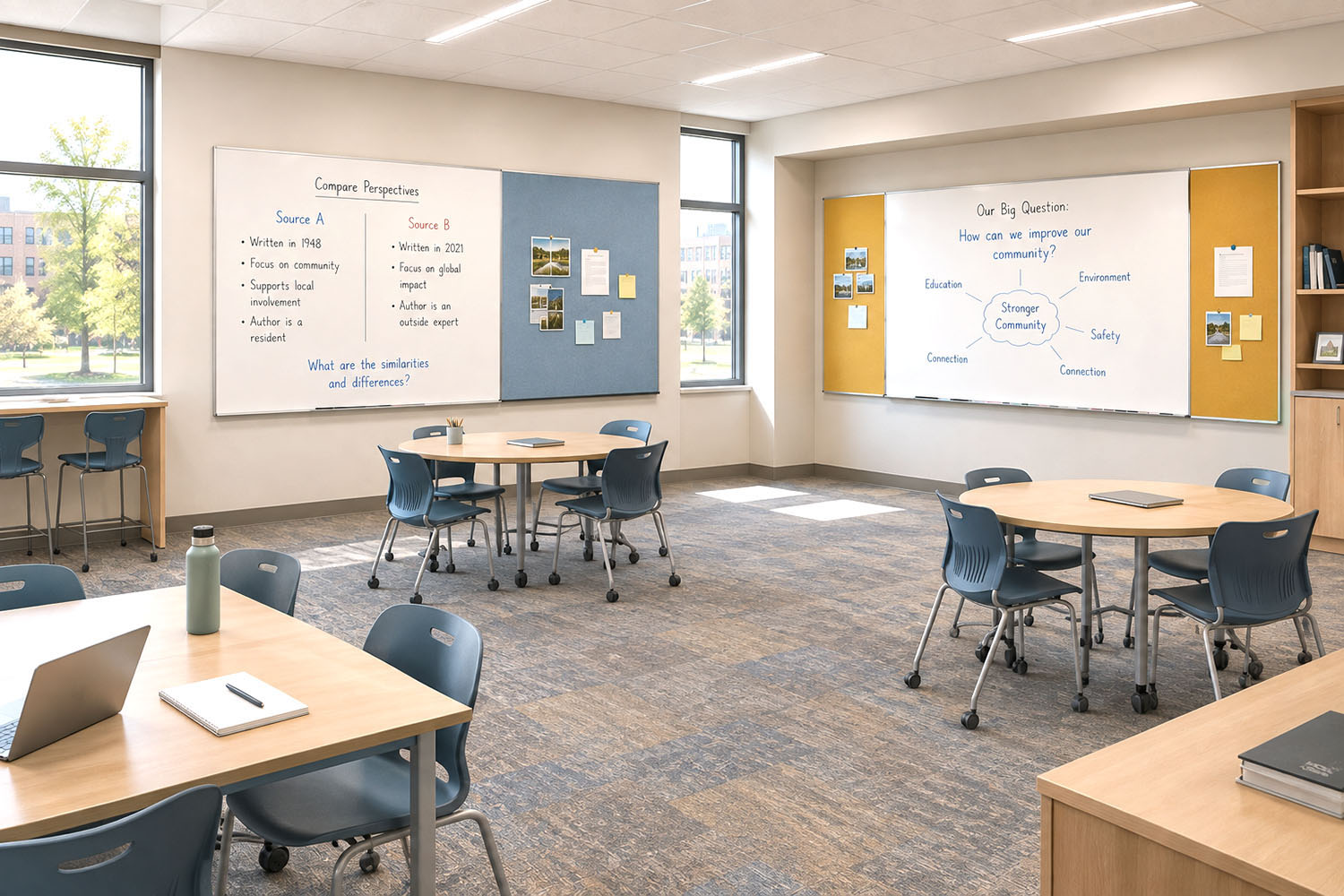
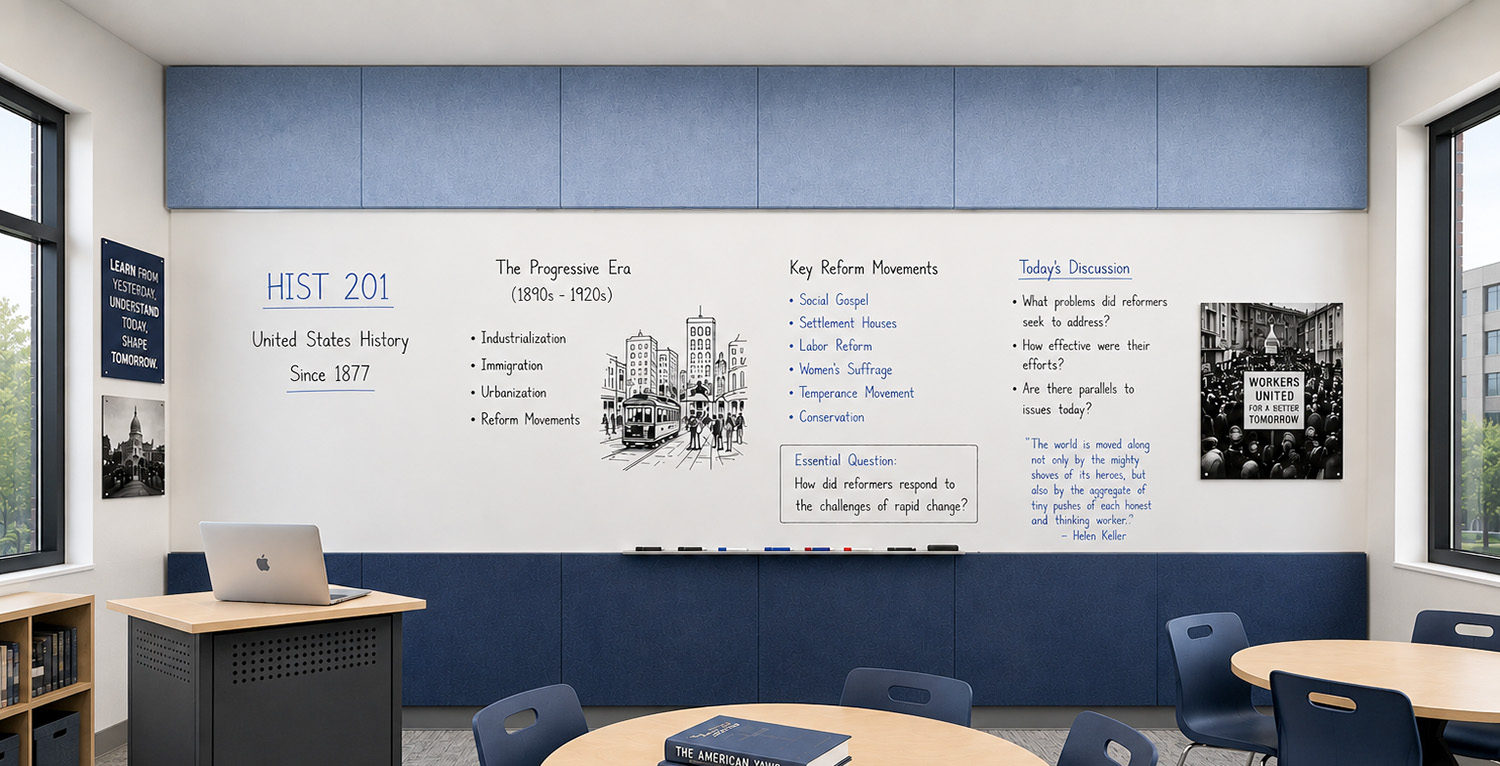
A writable surface can become a place to develop and revise an idea. A tackable surface can organize information and reveal connections. A sliding system can allow one area to serve multiple purposes. Storage can put resources within reach. Acoustic treatments can support focus and discussion.
Individually, these are surfaces and systems. Planned together, they become part of the learning infrastructure.
The planning question shifts from What goes on this wall? to What learning activities should this space support?
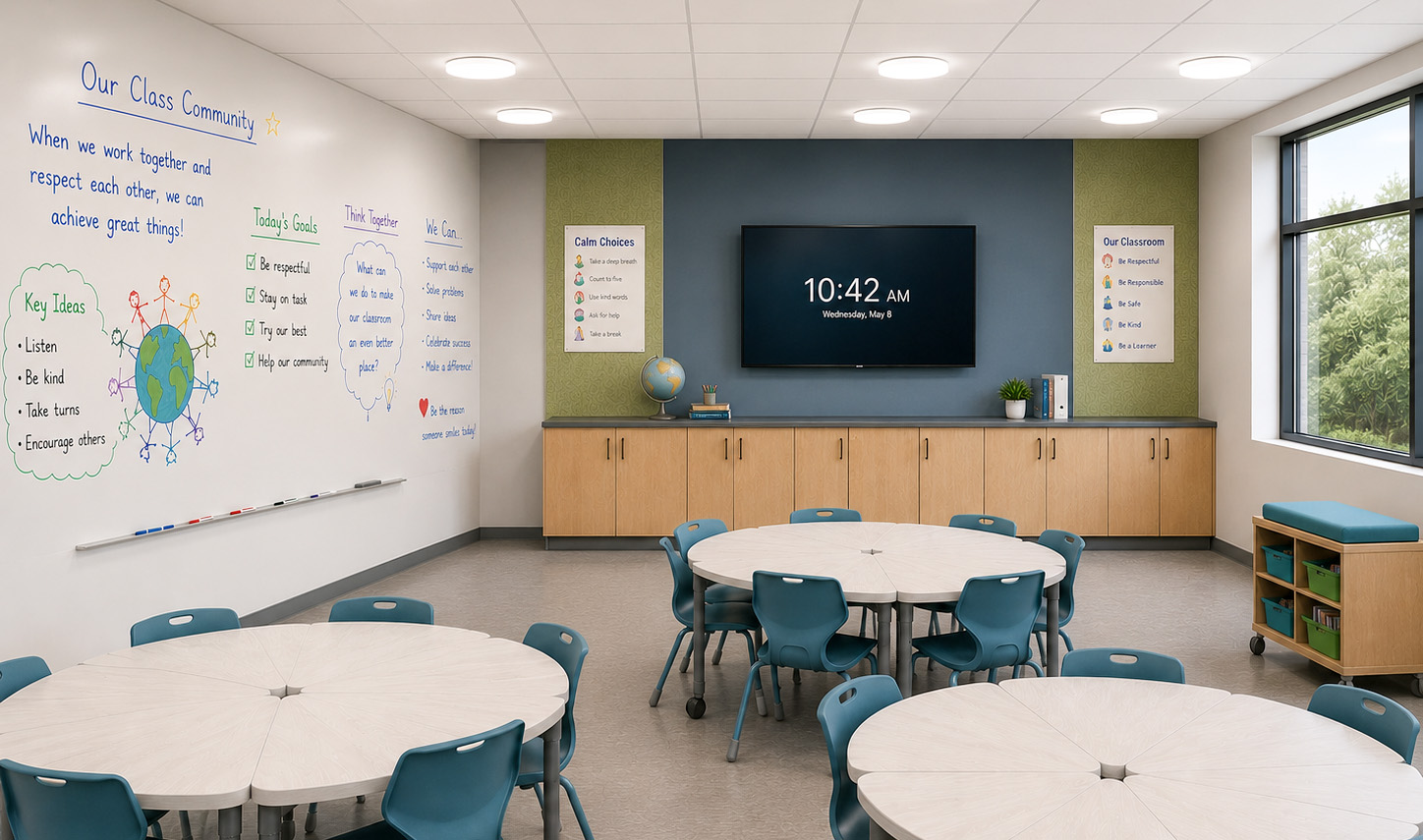
The objective is not more surface for the sake of more surface. It is the right surface in the right place for the activity that needs to happen there.
Design the Perimeter Around Learning Behaviors
A dynamic learning environment does not necessarily require more of everything. Instead of beginning with a product or surface type, planning can begin with the behaviors the environment needs to support.
| Vertical element | What students can do | What it can support |
|---|---|---|
| Writable surfaces | Write, sketch, solve, revise, explain | Visible thinking, problem solving, iteration |
| Tackable and display surfaces | Pin, sort, sequence, compare, reference | Communication, organization, connection making |
| Sliding and layered systems | Reveal, move, change, reconfigure | Flexibility, adaptability, expanded usable space |
| Vertical storage and resource organization | See, access, select, use, return | Agency, independence, efficient workflow |
| Acoustic surfaces | Listen, discuss, concentrate | Focus, communication, participation |
| Shared vertical work areas | Stand, gather, create, collaborate | Movement, engagement, teamwork |
The distinction matters. A wall is not valuable simply because it has more surface area. Its value comes from what that surface enables students and teachers to do.
Collaboration Needs More Than Movable Furniture
Flexible furniture has changed the way many classrooms are planned, allowing students to regroup and spaces to transition between activities. But moving the furniture is only part of the equation.
When students move from individual work to collaboration, they need somewhere for that work to go. Ideas need space to develop and become visible. Groups need places to gather around shared work. Resources need to remain accessible as activities change.
This is where the relationship between the floor plane and the vertical plane becomes important.
The floor plane creates places to gather. The vertical plane creates places to think, work, organize, and share.
Planning them together allows flexibility to extend beyond where students sit to what they can actually do once they get there.
Think in Working Zones, Not Just Walls
The same thinking can extend beyond individual surfaces to the organization of the room itself.
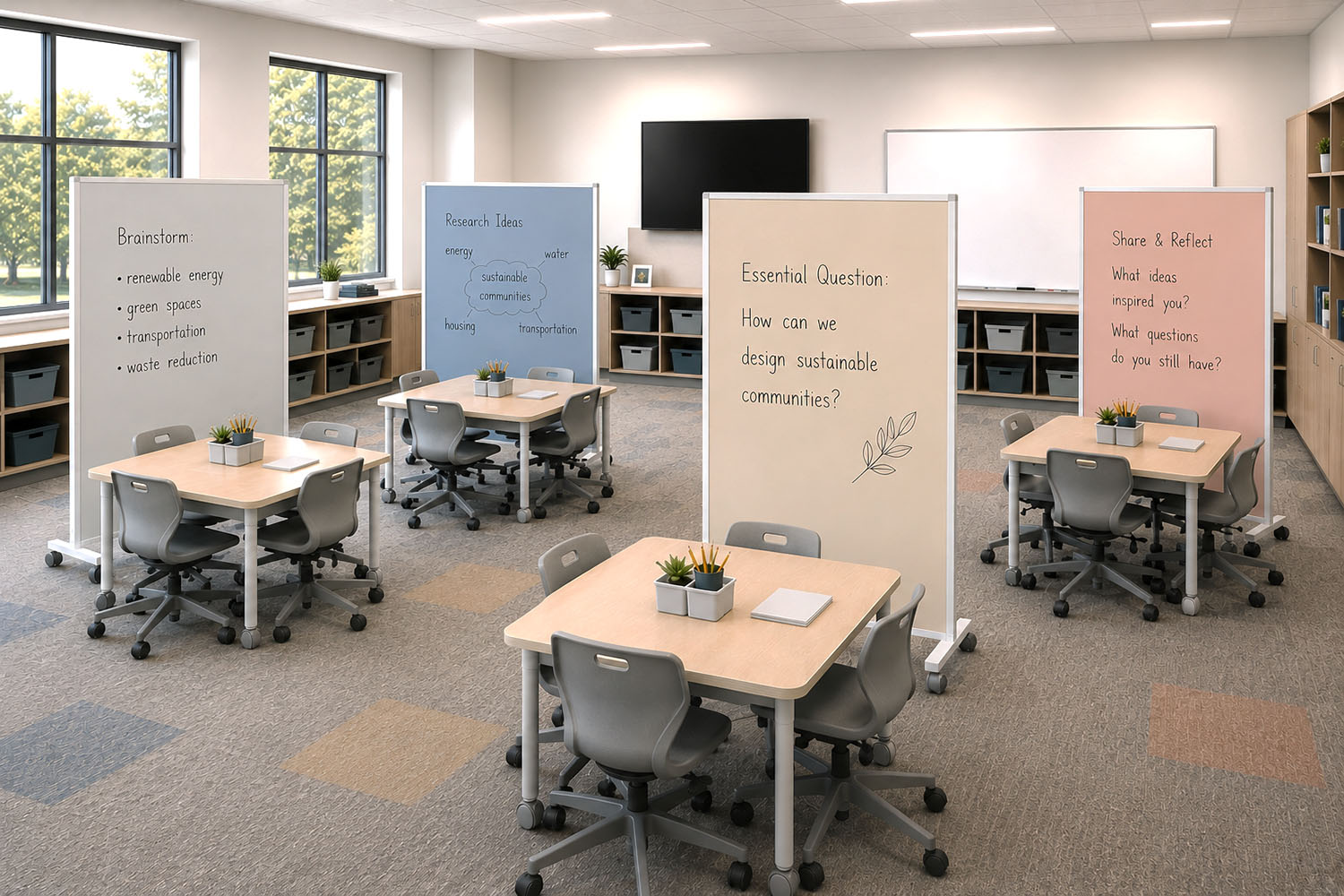
Rather than treating the classroom as a front and a back, it can be considered as a collection of working zones. One area may support whole group instruction while another accommodates small group work.
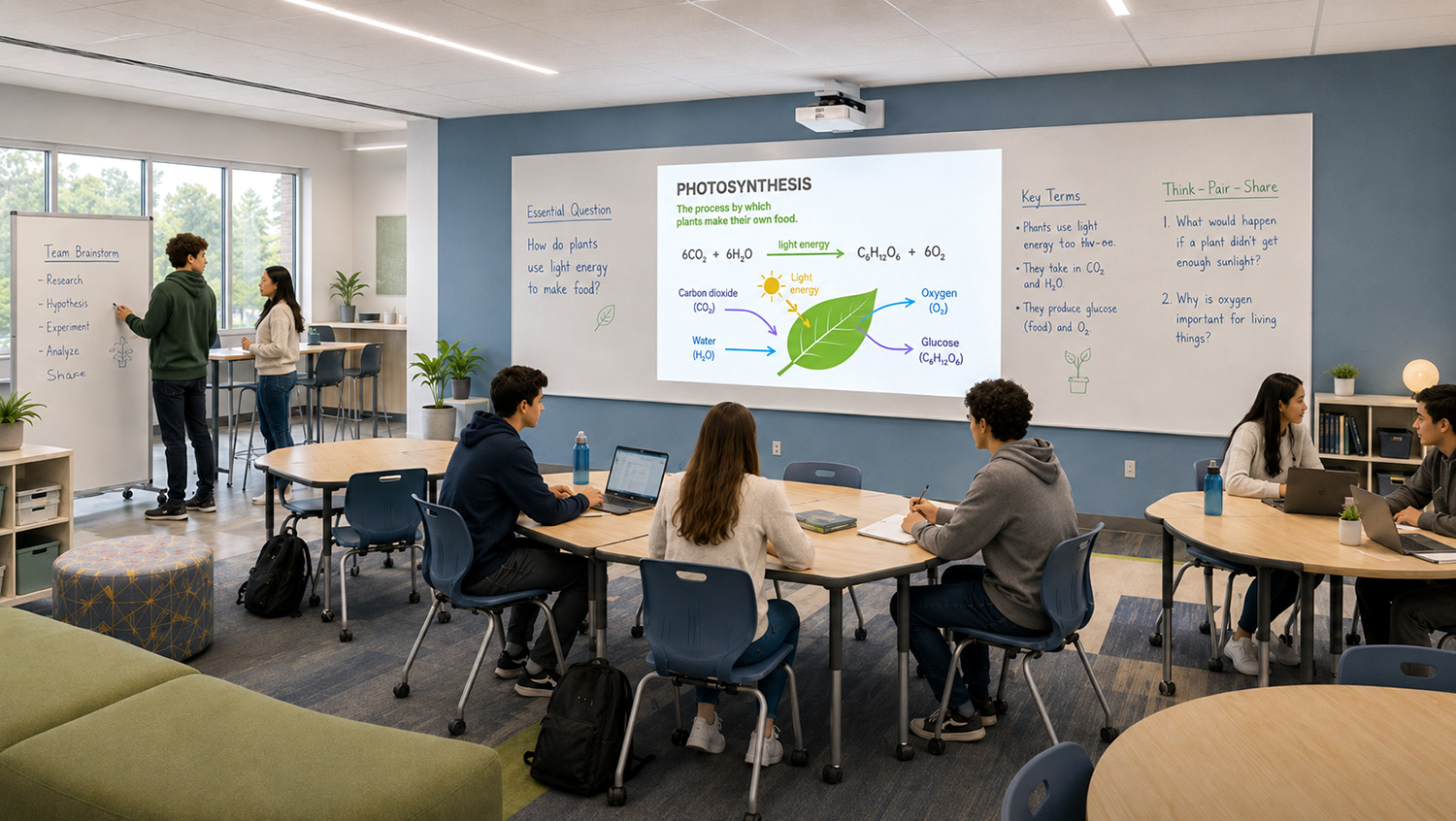
Mobile writable surfaces can bring the vertical plane into the room, creating temporary work zones, supporting small groups, dividing larger spaces, or moving with an activity as the configuration changes.
A lesson may begin with direct instruction, transition to independent work, shift into collaboration, and return to whole group discussion.
Movement as Part of the Learning Experience
Movement in a classroom is typically considered through the lens of circulation: clear pathways, accessibility, and the ability to navigate the space safely and efficiently.
But movement can also be connected to participation. Standing to contribute an idea, approaching a shared surface, accessing a resource, or moving between individual and group work changes the way students interact with the environment and with one another.
The design opportunity is not simply to create more open space. It is to consider what students encounter when they move through it.
Writable surfaces, shared work areas, accessible resources, and other points of interaction can give movement a purpose within the learning environment.
A classroom should not only accommodate movement. It should make that movement meaningful.
Plan the Vertical Plane Early
If the vertical plane is expected to support learning throughout the day, it cannot be treated as a finishing decision. It should be considered alongside furniture, technology, circulation, storage, acoustics, accessibility, and sightlines.
How many students need writable space at the same time?
Where will small groups gather?
How far away does information need to be visible?
Which resources should be within reach?
Where can additional working area be created without compromising circulation?
Can students gather around the surfaces comfortably?
Can the teacher see activity across the room?
Which surfaces need to support writing, display, organization, storage, acoustics, or more than one function?
Does the room need to transition between different teaching modes?
These are not simply questions about what belongs on a wall. They are questions about how the classroom is expected to function. The wall should not simply be the space left over after the floor plan is finished.
Give Thinking Somewhere to Happen
Building Thinking Classrooms provides a useful example of something much larger happening in education: teaching is becoming less dependent on a single point of instruction and more responsive to different modes of participation.
That becomes especially relevant in a technology rich world. As information becomes easier to access, the classroom can provide something different: a physical environment where students can engage with ideas, work through problems, organize information, interact with others, and make their thinking visible.
The opportunity is not to choose between digital and physical learning. It is to design an environment that supports both.
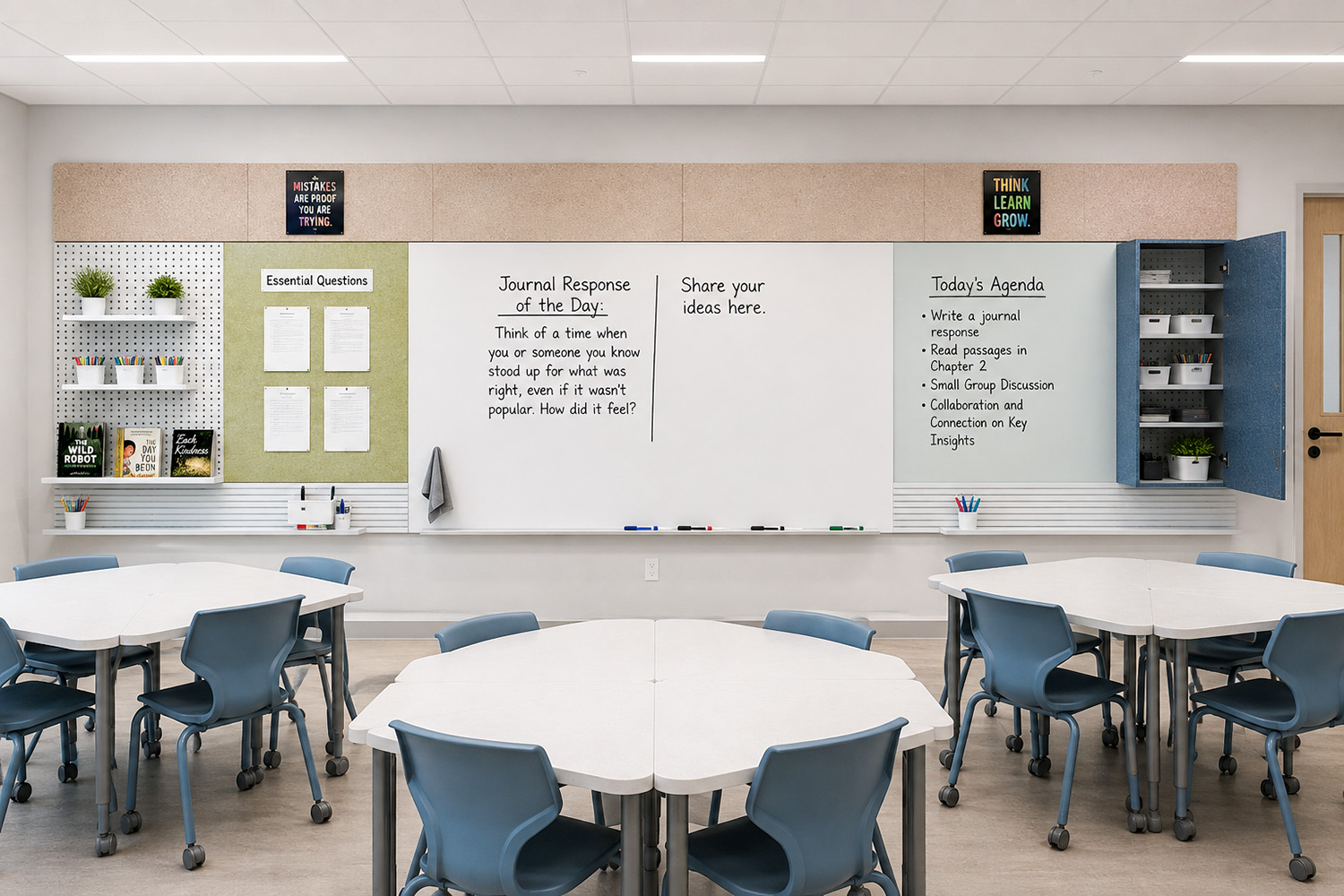
When the elements of the learning environment are planned together, the classroom becomes more adaptable to the different ways teaching and learning happen throughout the day.
The wall stops being the background to learning and becomes part of the environment that supports it.
Evidence & Further Reading
Building Thinking Classrooms: A Conversation With Dr. Peter Liljedahl
Liljedahl, P., Clarke, A., & Morrison, N. (2021). Journal of Mathematics Education at Teachers College, 12(1), 1–7.
A conversation with Peter Liljedahl exploring the research and classroom practices behind the Building Thinking Classrooms framework.
How to Turn Your Math Classroom Into a ‘Thinking Classroom’ — Edutopia
An educator-focused look at Thinking Classroom practices and how they can encourage student participation, problem-solving, and collaboration.
Improve Student Thinking in the Classroom Using Vertical Whiteboard Teaching — [Math]odology
Further reading on vertical whiteboard teaching and the use of writable surfaces to support active thinking, movement, and collaboration.
Continue the Conversation
Interested in learning more about the research behind evidence based learning environments?
Schedule our Designing for Visual Acuity and Cognitive Clarity CEU to explore how neuroscience, cognitive psychology, and intentional design can improve learning outcomes.
Or explore Platinum’s integrated vertical learning solutions designed to support active, collaborative, and future ready classrooms.
Share
Newsletter
Sign up for our newsletter to get the latest updates and insider news.