
The Learning Brain in the Age of AI
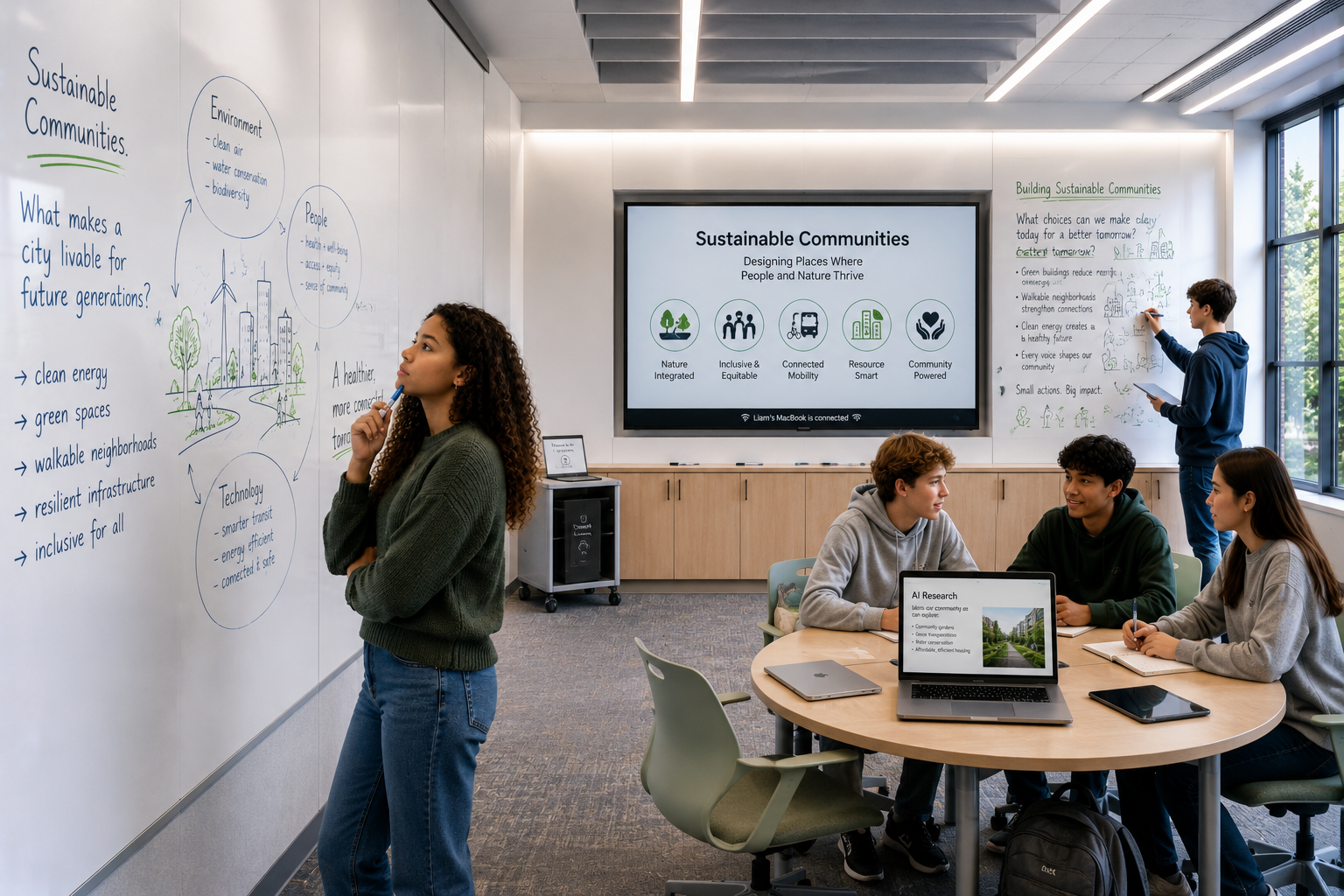
Why Vertical Learning Spaces Matter
Artificial intelligence is transforming education. Students can now summarize books, solve equations, generate essays, and answer complex questions in seconds. Never before has information been so accessible. But while technology continues to evolve at an extraordinary pace, the science of learning has remained remarkably consistent.
Learning is not simply receiving information. It is the active process of questioning, making connections, testing ideas, collaborating with others, and building understanding through experience.
This raises an important question for educators, architects, and designers: If AI is changing how information is delivered, how should learning environments evolve to support how the brain actually learns?
One answer may be hiding in plain sight.
The Most Underutilized Learning Tool in the Classroom
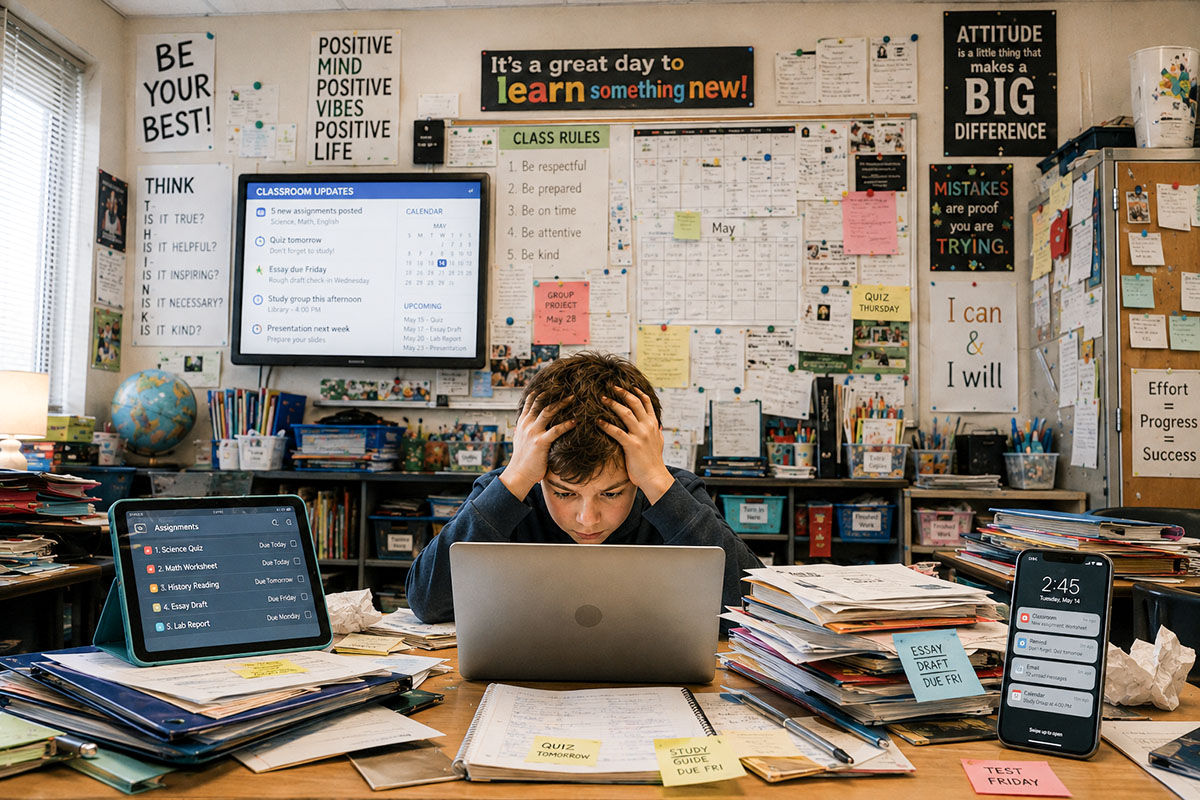
Classroom walls are part of the cognitive ecosystem. Yet they often fall at either end of the spectrum: underutilized surfaces that offer little support for learning, or visually overloaded surfaces that compete for students’ attention.
As AI and technology become increasingly integrated into learning—and students navigate more screens, digital tools, notifications, and information—the physical environment becomes even more important in supporting how students focus, process, and learn.
Vertical Surfaces Help Reduce Cognitive Overload
Today’s learners process an extraordinary amount of information. Visual clutter, competing displays, AI-enabled technology, inconsistent organization, and environmental distractions can all compete for attention before instruction even begins.
This does not mean classroom walls should be empty. It means they should be intentional.
Thoughtfully designed vertical learning systems can reduce unnecessary competition for attention by creating clear visual hierarchies, accessible storage, dedicated learning zones, and intuitive spaces that help students identify what is relevant and where to find it.
The goal is not to fill every available surface. Nor is it to strip the classroom bare. The goal is to make every wall work.
When the environment becomes clearer, thinking often becomes clearer too.
Visible Thinking Creates Better Learning
Research consistently demonstrates that learning improves when students actively participate rather than passively consume information.
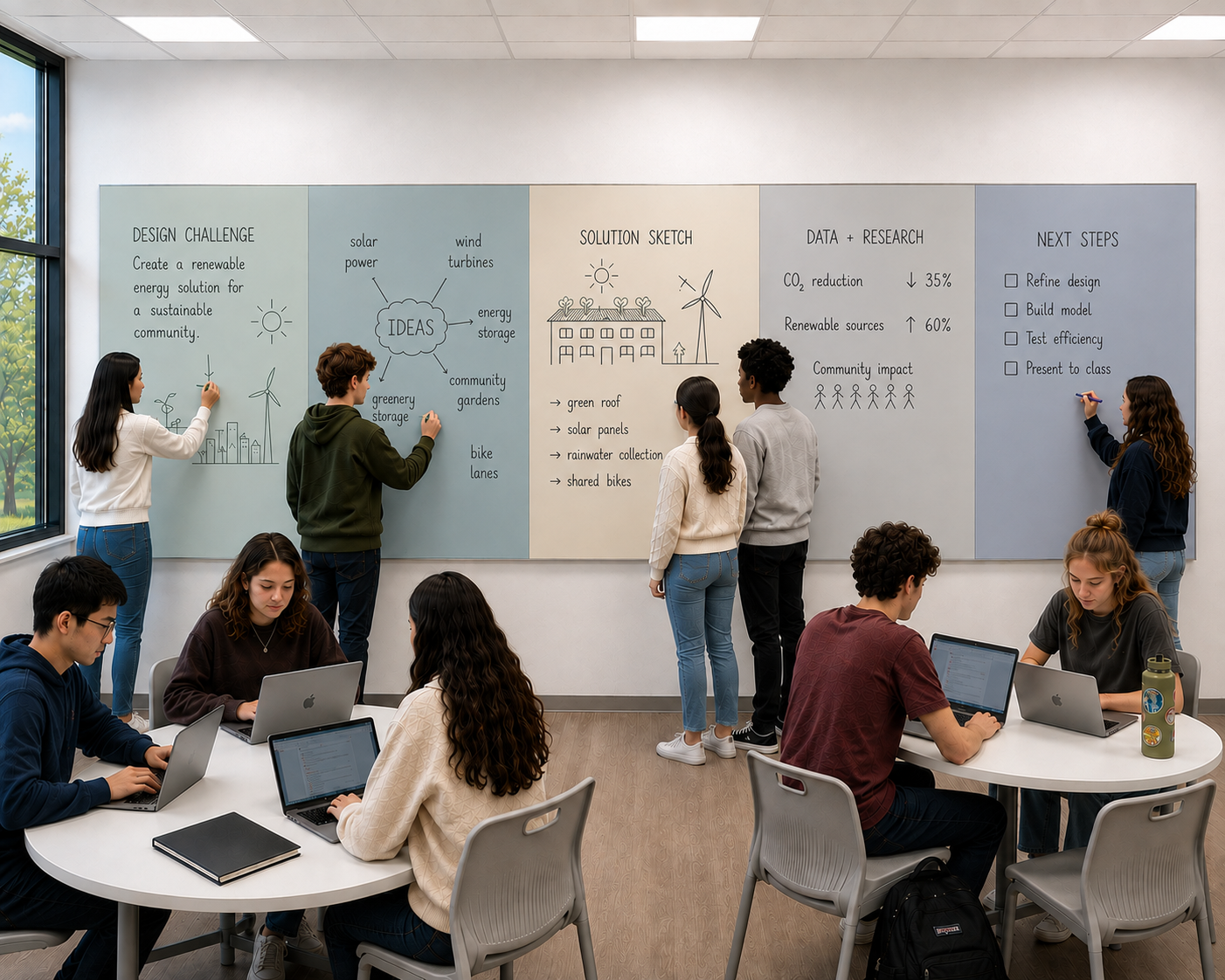
Vertical writable surfaces transform students from observers into contributors. Standing to write encourages movement, collaboration, discussion, and immediate feedback. Students externalize their thinking, compare ideas with peers, revise their work in real time, and develop stronger spatial awareness. Rather than simply producing an answer, learners make their thinking visible.
In an era where AI can instantly generate finished work, this process of visible thinking may be more valuable than ever.
The Environment Supports More Than Vision
Learning is multisensory. Noise, lighting, texture, organization, and movement all influence how students process information.
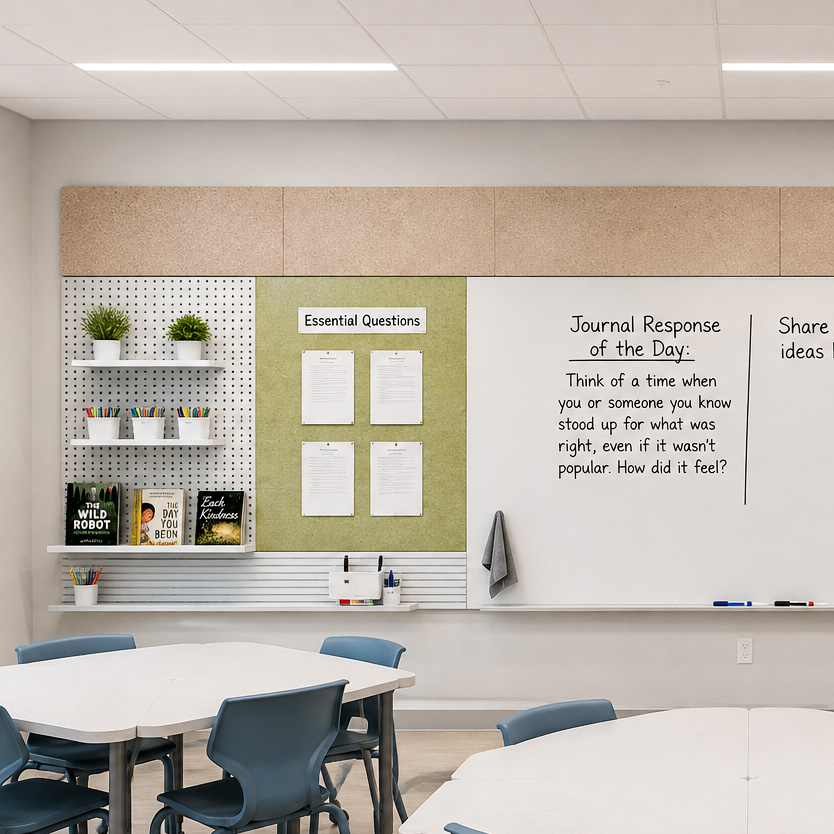
Acoustic panels reduce reverberation and improve speech intelligibility.
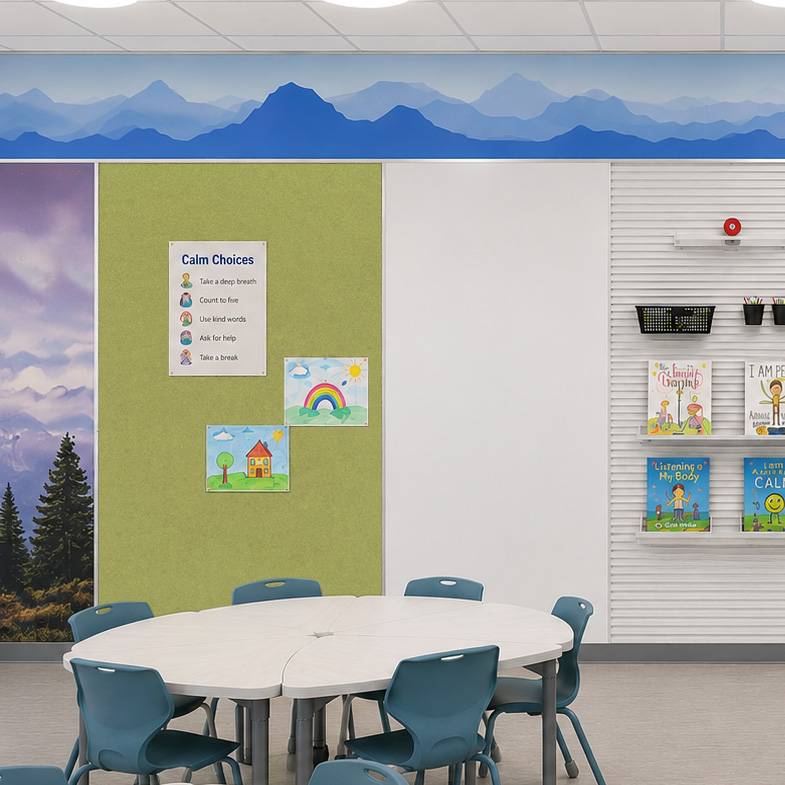
Sensory surfaces encourage exploration and self regulation.
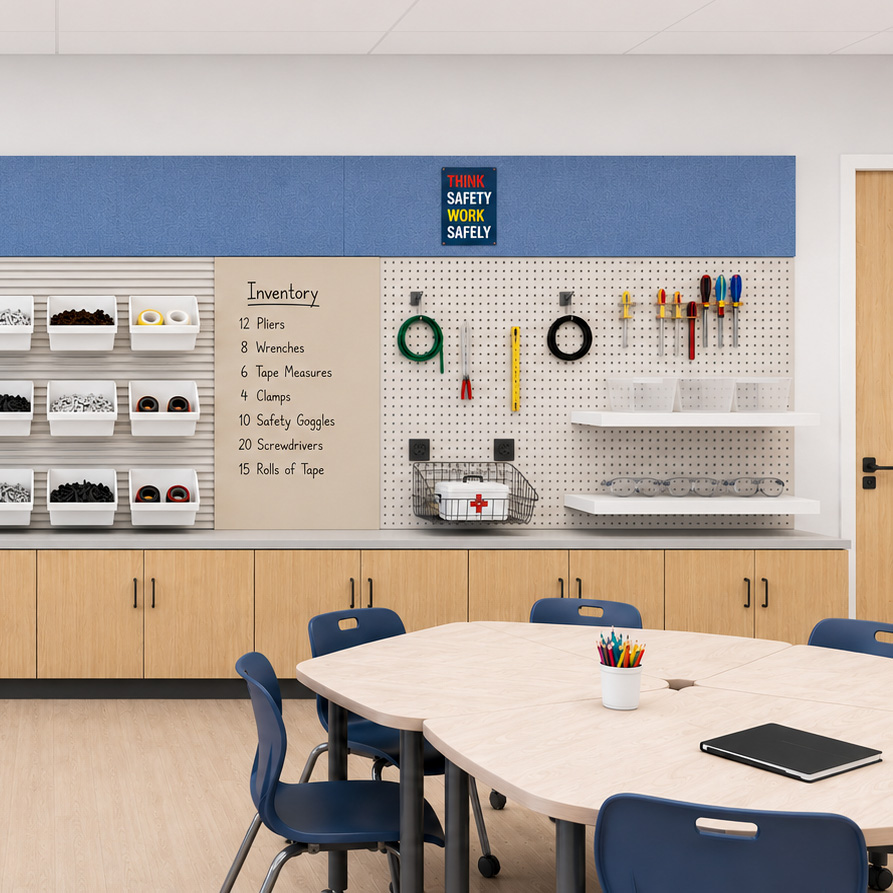
Organized vertical storage reduces distractions while improving accessibility.
Together, these elements create environments that support attention, comfort, and inclusion for every learner.
Designing Classrooms for the Future
Technology will continue to advance. Artificial intelligence will become more capable. Digital tools will continue to reshape education.
But none of these developments change one fundamental truth: People still learn through attention, movement, discussion, reflection, and experience.
The classrooms that prepare students for the future will not rely solely on technology. They will intentionally combine digital innovation with physical environments designed to encourage curiosity, collaboration, critical thinking, and active learning.
Evidence & Further Reading
LAUSD Bans Screen Time Before Second Grade — Los Angeles Times
A look at LAUSD’s decision to limit classroom screen time as educators and families reconsider how technology fits alongside hands-on learning, interaction, and other classroom experiences.
America’s Tech-Filled Classrooms Are Facing a Backlash Against School-Assigned Devices — The Washington Post
Examines a broader national shift as schools reconsider the amount of technology students use during the school day and look for a better balance between digital and physical learning.
Schools Are Starting to Teach AI Literacy. For Many, That Means Helping Kids See Chatbots’ Flaws — Associated Press
Explores how schools are approaching AI literacy while emphasizing analytical thinking, verification, and helping students understand when—and when not—to rely on AI.
Going Vertical in ELA — The Teaching Factor
An educator’s perspective on using vertical learning strategies for reading, writing, discussion, feedback, and collaborative work—showing how active learning at the wall can extend beyond mathematics.
Vertical Learning with Classroom Walls — Community Playthings
Explores how classroom walls can become active learning spaces that create opportunities for movement, interaction, collaboration, and visible thinking.
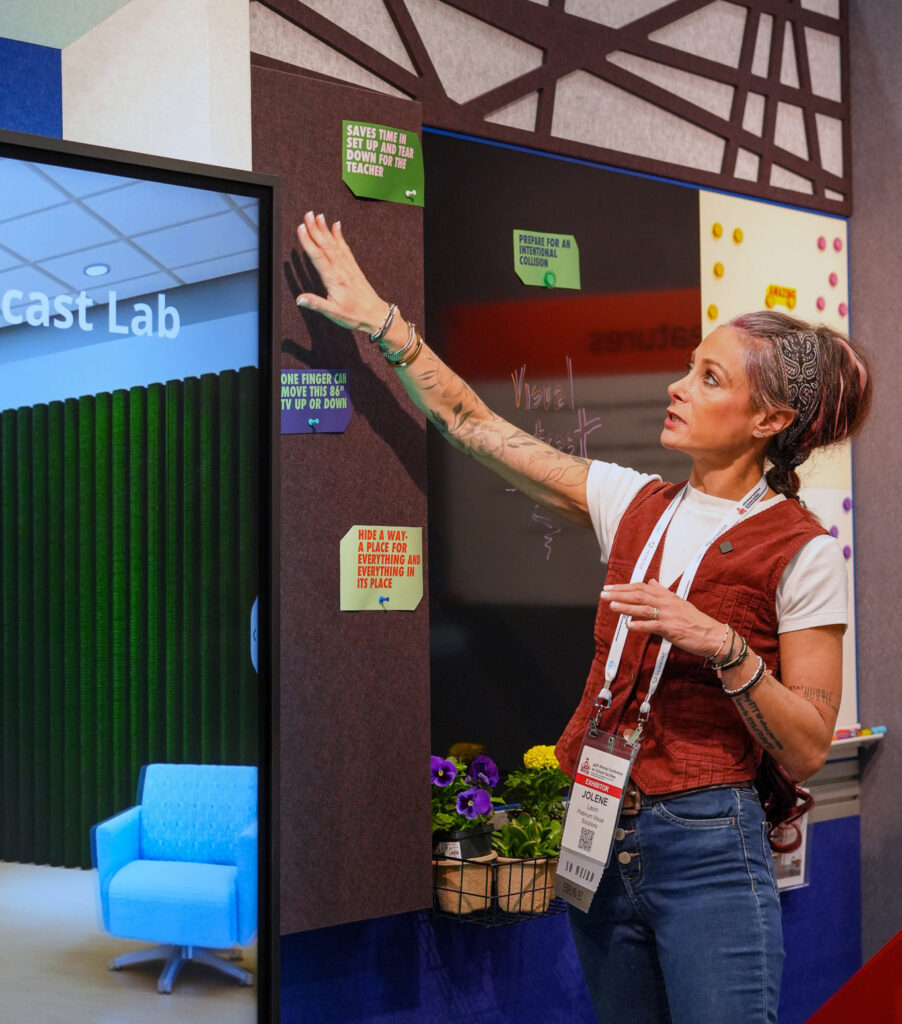
Continue the Conversation
Interested in learning more about the research behind evidence based learning environments?
Schedule our Designing for Visual Acuity and Cognitive Clarity CEU to explore how neuroscience, cognitive psychology, and intentional design can improve learning outcomes.
Or explore Platinum’s integrated vertical learning solutions designed to support active, collaborative, and future ready classrooms.
Share
Newsletter
Sign up for our newsletter to get the latest updates and insider news.